
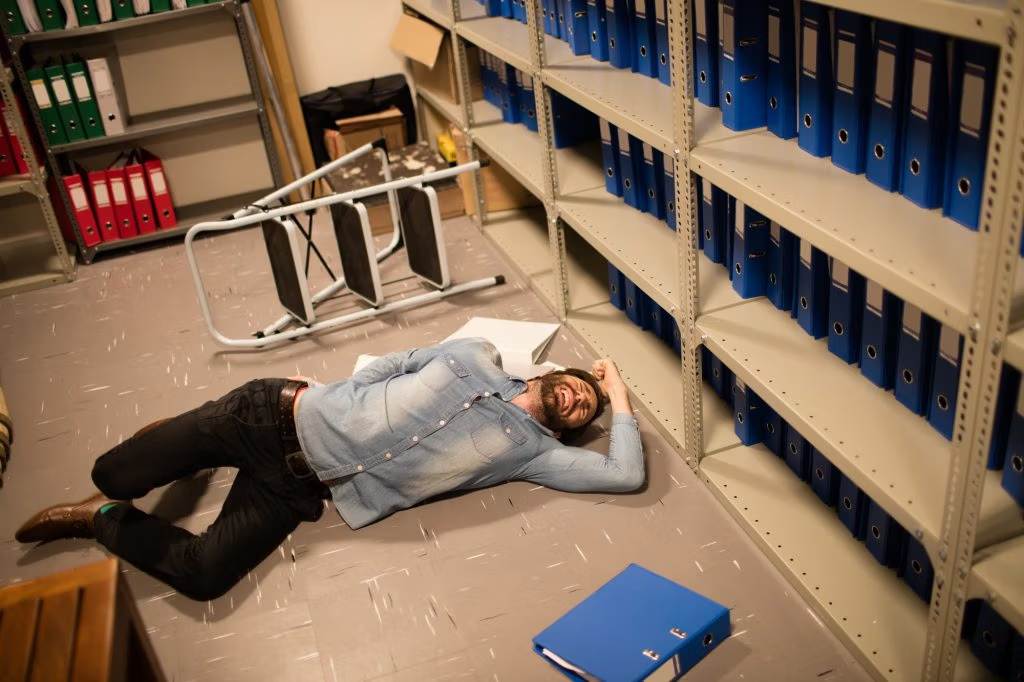
A routine trip to the store, a walk along a city sidewalk, or an ordinary day at work can become a medical emergency when something falls from above without warning. For instance, a tool dropped from scaffolding, merchandise slipping from a high shelf, or construction debris tumbling from a building can lead to surgery, missed paychecks, and months of recovery. Yet the person or business responsible may not be obvious. Determining who is liable for injuries caused by a falling object requires looking to the decisions, safety practices, and failures that led to the accident.
This article examines the risks of falling objects, what evidence can help build your personal injury case, and why you should act quickly. Knowing that can help you determine who might be liable to pay you damages.
How Serious Are Falling Object Injuries?
A falling object can cause serious damage, even if it is not particularly heavy. A tool slipping from a worker’s hand or a piece of equipment coming loose overhead can cause injuries that affect your work and everyday routine. How far the object falls and where it strikes you can make a real difference in the outcome.
A blow to the head can leave you with a concussion or a serious brain injury. Depending on what hits you, you could also suffer a broken bone, damage to your spine or face, internal bleeding, or injuries caused by crushing force.
The medical bills are only part of the problem if you cannot return to work or need months of rehabilitation.
The object itself may offer the first clue, but it does not necessarily point to the person responsible.
Who May Be Liable for Falling Object Injuries?
Responsibility does not automatically belong to the person who owned the object or the property where it fell. You need to examine who created the danger, who had a duty to address it, and whether a failure to exercise reasonable care contributed to the accident.
Property Owners and Business Operators
If you are injured by a falling object in a store, apartment complex, or other property, the owner or operator may be liable for failing to address a foreseeable hazard. This can include unstable goods, loose ceiling fixtures, or construction materials that drop onto a walkway. Potential failures include:
- Leaving merchandise or equipment in an unsafe condition.
- Not addressing reports of loose fixtures or broken shelving.
- Not checking places where objects are likely to fall.
- Failure to provide proper barriers or warning around overhead hazards.
Employers and Construction Companies
Falling tools, materials, and equipment can be a hazard at construction sites for workers and passersby. A general contractor, subcontractor, or other company could be held liable if negligence contributed to the accident.
Negligence can include unsecured tools, improperly stored materials, or inadequate overhead protection. If you are injured at work, workers’ compensation may cover your injuries without proof of employer negligence. Depending on the circumstances, you may also have a claim against a responsible third party.
Contractors and Maintenance Companies
When a contractor hired to repair a roof, install a sign, or maintain overhead equipment creates a falling-object hazard, the contracted company may be liable. For instance, if a contractor crew fails to secure a fixture properly and it falls, injuring you. A property owner may also be responsible if they knew of the risk and did nothing to fix it. While contracts can define both parties’ roles, they do not necessarily define liability.
Manufacturers and Equipment Suppliers
Sometimes, a defective product causes an object to fall. A faulty bracket, broken fastener, or defective mounting system may allow equipment or fixtures to detach unexpectedly. If the manufacturer or another party in the distribution chain caused your injuries through a defective design, manufacturing defect, or inadequate warning, they may be liable. An examination of the failed component, the product design, and even maintenance records may help determine what went wrong.
What Must You Prove to Establish Liability?
Determining a potentially responsible party is just the first step. Generally speaking, the elements of a negligence case are: a legal duty, a violation of that duty, a provable injury, and a causal connection between the incident and the injury. A case in point: a company must keep its premises reasonably safe. Consider a company that lets a broken overhead shelf continue to be used. It failed to correct the hazard, and you were injured when an object fell.
These facts could support a negligence claim.
Your case will depend on questions such as:
- Was the danger foreseeable? Could the responsible party reasonably have anticipated that an object might fall and injure someone?
- Who controlled the hazard? Did the owner, contractor, employer, or another party have responsibility for the area or activity?
- Was the risk addressed? Were there inspections? Were repairs performed? Was secure storage installed? Were at least warnings or protective barriers installed?
- Did the failure cause your injuries? Can the available evidence connect the dangerous condition to the incident and your resulting harm?
You do not necessarily have to prove that a defendant meant to cause harm or knew that an accident was certain to happen. Negligence often involves a failure to take precautions that a reasonably careful person or business would have taken under similar circumstances.
At the same time, an accident alone does not establish negligence. The specific facts must support the claim.
Can More Than One Party Be Responsible?
Yes. Falling-object accidents sometimes result from a chain of failures rather than a single mistake.
Suppose a subcontractor may leave materials unsecured on an upper floor. A general contractor may fail to enforce site safety procedures. Or a property manager may allow pedestrians to pass through an inadequately protected area. Based on the available evidence, several parties may be responsible for your injuries.
You can also contribute to the defendant’s negligence by failing to notice warning signs or by entering a restricted area. These accusations do not necessarily prove that you are not entitled to the claim. The questions that apply include: Did you or responsible parties act reasonably? Was the danger obvious? Should the defendant have known someone in your position could still be injured?
What Evidence Can Help Support Your Claim?
The scene of a falling object accident can change quickly. Debris may be removed, equipment repaired, and witnesses may leave before anyone documents what happened. Preserving available evidence can help establish how the incident occurred and who may be responsible.
If your condition permits, consider taking these steps:
- Photograph the Scene: Capture the object, its original location if visible, the surrounding area, damaged equipment, warning signs, and any apparent safety barriers.
- Find Witnesses: Collect the names and contact information from people who saw the object fall or observed the hazard beforehand.
- Report the Incident: Notify the property owner, business manager, employer, or other appropriate representative and request a copy of any incident report.
- Keep Medical Records: Seek prompt medical attention and retain records of your diagnosis, treatment, prescriptions, and recommended follow-up care.
- Preserve Related Documentation: Keep receipts, pay records, photographs of your injuries, and communications about the incident.
Depending on the case, useful evidence may also include surveillance footage, inspection logs, maintenance records, construction plans, safety procedures, product information, and witness statements.
Do not put yourself at risk trying to retrieve an object or investigate an unsafe area. If you suspect that equipment or a product failed, avoid altering or discarding it when possible. A qualified attorney may be able to send a preservation request and investigate records that you cannot obtain on your own.
What Are the Time Limits for Filing an Injury Claim?
Limits on time may impact your ability to seek compensation. In most states, many personal injury cases have a two-year statute of limitations, which is typically triggered when the claim is made, under 735 ILCS 5/13-202. In some cases, such as claims against the government, against minors, in certain employment situations, or in other special situations, a different analysis may be required.
Workers’ compensation claims also have notice and filing requirements.
Do not assume that you always have two years. Speak with an attorney as soon as possible.
Call Keys Law Offices Today!
An improperly handled fallen object injury claim can disrupt your life in an instant, leaving you stressed, injured, and with unanswered questions about what comes next. At Keys Law Offices, we are determined to support individuals and families facing these issues and provide advice and representation in personal injury cases and claims. With deep knowledge of how these cases are handled, our firm will get to the bottom of the case, build a strong claim, and seek the financial compensation our clients deserve.
Our experienced team knows how to investigate and litigate your case to get the compensation you deserve. More importantly, we understand the emotional side of these cases and offer compassionate counsel, so you receive what you are entitled to.
Help is available and only a phone call away.